

This English version was translated from the Chinese original with AI assistance. The Chinese text is authoritative.
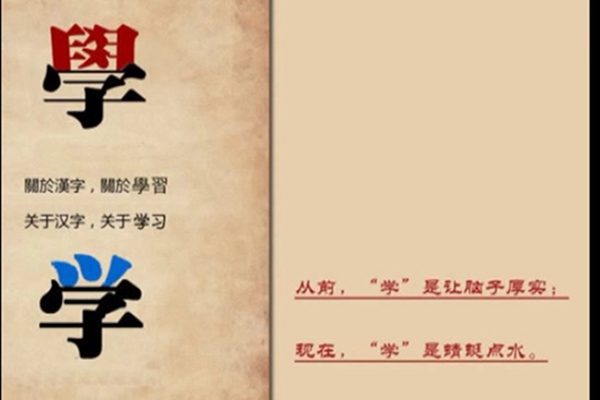
The various omens in the simplified characters are coming true (Image source: He Hanbiao — screenshot from a YouTube video)
Chinese culture is not as simple as the surface people see; a rite, a style of dress, a single character all contain deep meaning and are closely bound up with people’s lives. After Chinese characters were simplified, a netizen compared today’s mainland China with the simplified characters now in use and listed the following 43 startling correspondences.
亲 (qīn, “kin, parents”)
(Image source: He Hanbiao — screenshot from a YouTube video)
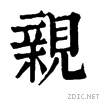
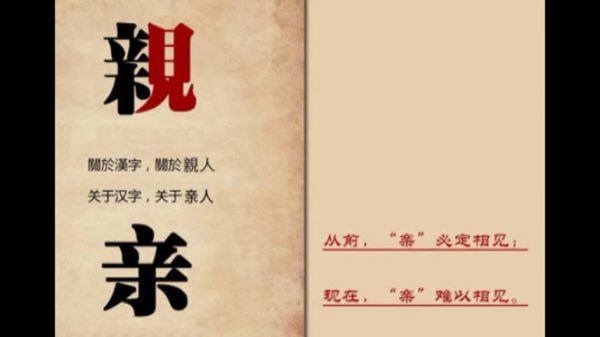
亲 without 见 (“see”): you scarcely see your parents once a year. Sowing wild oats everywhere, one’s children are seldom at one’s side.
产
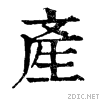
产 (chǎn, “produce, give birth”) without 生 (“birth”): abortions are seen everywhere. Good farmland lies abandoned all around; no one wants grain, only money.
乡

乡 (xiāng, “village, home country”) without 郎 (“young man”): everyone rushes off to the city. In the village you rarely see a young face — only the old and weak, the sick and disabled.
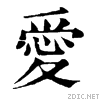
爱
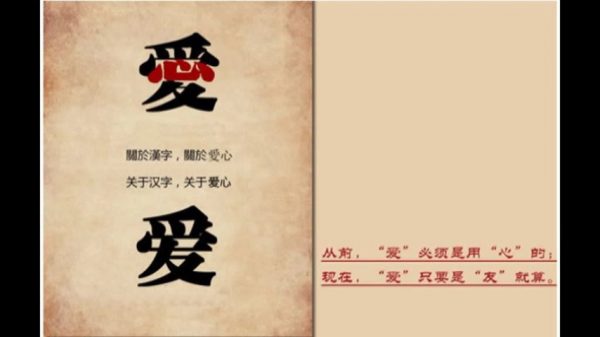
(Image source: He Hanbiao — screenshot from a YouTube video)
爱 (ài, “love”) without 心 (“heart”): may I ask, how many feel true affection? Play-acting for the occasion is everywhere; as long as you have money, you’re “family.”
备
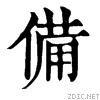
备 (bèi, “prepare, reserve”) without 人 (“person”): are reserves to be stored by the gods? Resources exhausted, farmland all taken over; no thought for children and grandchildren, only for oneself.
厂
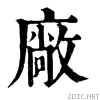
厂 (chǎng, “factory”) is empty and hollow: enterprises’ capital is sunk into buildings. Exorbitant taxes, miscellaneous levies, arbitrary fees; the people gone, the buildings empty — naturally poor.
面
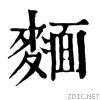
面 (miàn, “flour, noodles”) without 麦 (“wheat”): guess the reason for yourself. The flour has no fragrance of wheat — in fact it is mixed with rongalite.
进
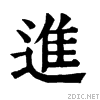
进 (jìn, “advance”) without 佳 (“good”): walk into the well 井 and become fish and shrimp. One’s career is like the moon in the water; seeking wealth is just like flowers in a mirror.
应
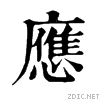
应 (yìng, “respond, promise”) without 心 (“heart”): verbal promises seldom come true. Scheming and slippery, shameless — no wonder the world has no good faith.
卫
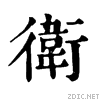
卫 (wèi, “defend”) without 行 (“march”): how could one go on a distant expedition? Unable even to protect one’s own home, how can the world enjoy peace?
听
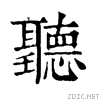
听 (tīng, “listen”) is short of 耳 (“ear”): don’t laugh at this saying. Go and look at a big meeting — how many there are not asleep?
导
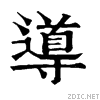
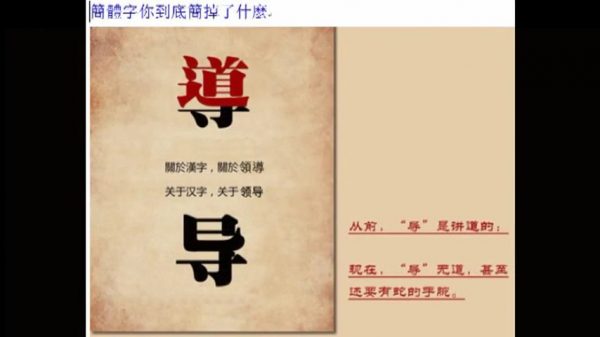
(Image source: He Hanbiao — screenshot from a YouTube video)
导 (dǎo, “guide”) without 道 (“the Way”): how can guiding be done like this? Talking at random as the mood takes them, self-righteous and unashamed.
优
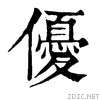
优 (yōu, “excellent”) should have 忧 (“concern”): in all the world, those concerned for the world are hardest to find. To imitate wrongdoing knowingly (尤) is a still greater crime; such people make one despair.
采
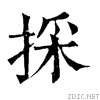
采 (cǎi, “gather”) without 手 (“hand”): where is there such gaining? Everyone wants something for nothing; everyone seeks to wangle and cut corners.
尝
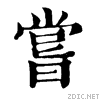
尝 (cháng, “taste”) without 口 (“mouth”): good or bad goes by feeling alone. Don’t dream of delicacies from mountain and sea; firewood, rice, oil and salt are worry enough.
孙
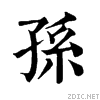
子 with 系 makes 孙 (sūn, “grandson”); 子 with 小 is vastly different from 子 with 系. 子小 (a little son) is after all still a son — could it be the daughter-in-law is sleeping with her father-in-law?
实
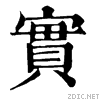
实 (shí, “solid, substantial”) without 贯 (“strings of coins”): no hoarded strings of cash at home. Only heads and no money to use — such “prosperity” is pitiful indeed.
质
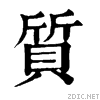
Quality (质) gone bad, making everyone a victim. Food laced with poison and fakery — the greatest sorrow of China!
敌
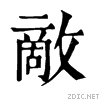
The tongue 舌 becomes the enemy (敌): watch your words and speeches. “A hundred schools contending” is mere window dressing; you must speak in the same tone as me.
馆
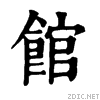
舍 (“lodging”) pushed aside: everything puts food 饣 first. Schools and martial-arts halls are rice buckets; good-for-nothings write a new chapter.
耻

耻 (chǐ, “shame”) without 心 (“heart”): conscience utterly lost, hard to restrain. Instead of helping the weak, they prey on them.
历
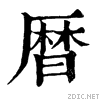
历 (lì, “calendar, history”) without 日 (“sun”): if I don’t say it, you wouldn’t know. Without the sun it is a long night; get through hard days and don’t indulge in luxury.
宁
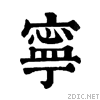
宁 (níng, “peace”) without 心 (“heart”): said like this, no one believes it. Sitting at home, disaster strikes — forced demolitions, officials harassing the people.
胜
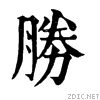
胜 (shèng, “victory”) without 券 (“certainty”): one can only scrape by and drag out an ignoble existence. Before the powerful, the look of a lackey; before the weak, a ferocious face.
杰

杰 (jié, “hero, outstanding”) without people: how can great achievements be accomplished? Names that don’t match reality are everywhere; shoddy goods passed off as good, the fake confused with the real.
欢
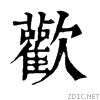
又 (“again”) and 欠 (“owe”) make 欢 (huān, “joy”): everyone borrows money and has no wish to repay. When the bank presses, they flee — they have a home abroad anyway.
难
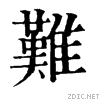
又 and 隹 make 难 (nán, “difficult”): this simplification is truly absurd. Extreme joy turns to sorrow, hard to settle; one sudden change and disaster strikes.
边
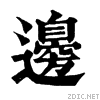
边 (biān, “border”) without 旁 (“side”): walking with effort, unsightly. Mongolia was originally Chinese land — does it still count as a frontier pass?
痴

疑 (“doubt”) turned into 知 (“know”): sickness 疒 with knowing, and you call it foolish 痴. Lie upon lie that cannot be exposed — is only muddle-headedness wise?
笔
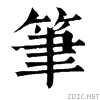
笔 (bǐ, “brush, pen”) is not straight: history is often written with a crooked brush. Holding the brush and writing truthfully has always existed, but now this tradition was long since lost.
乐
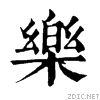
乐 (lè/yuè, “joy, music”) without 丝 (“silk strings”): whether you are joyful, you know yourself. Only a wooden frame with silk strings and bamboo can be called music; being told you are happy is hard to support.
惊
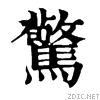
The heart 忄 holds the capital 京: can it be that the authorities harm the common people? Since ancient times only horses 马 were startled (驚); now it is people who are startled.
宾
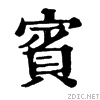
Soldiers 兵 come into the house 宀: since ancient times this has been called the state of a chaotic age. An honored guest comes to the house, but the treasure 贝 is missing — though the lavish banquet is offered with sincere intent.
栗

栗 (lì, “tremble”) without 心 (“heart”): no one believes in fear of the law. Graft and corruption are everywhere; power replacing law is the reality.
怀
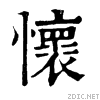
The heart 忄 not close: if the heart is unwilling, how can it be called embracing (怀)? With hearts unwilling, people are unhappy; few have faces breaking into smiles.
丰
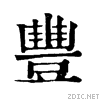
丰 (fēng, “abundant”) rotten through: ears of wheat without enclosure and no beans 豆 either. Harvest figures rely on fabrication; every year output is high.
穷
(Image source: He Hanbiao — screenshot from a YouTube video)
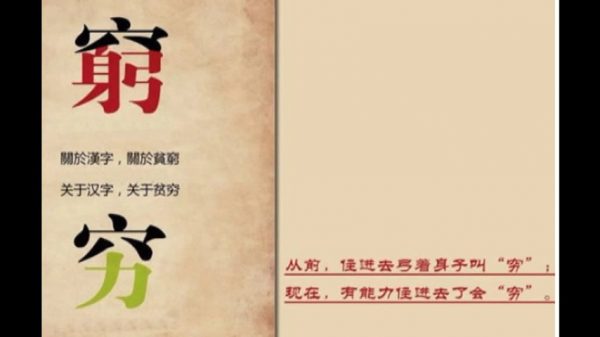
Poor (穷) or not poor: rich men live in subsidized housing. Insatiably greedy, only regretting it’s too little — such times are truly unjust.
达
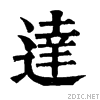
Whether one gets through (达) or not depends entirely on a word from the official lord. If he says you go down, down you go; if he says you rise, you rise.
础
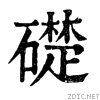
石 (“stone”) and 出 (“out”) make 础 (chǔ, “foundation”): no wonder the foundations are not solid. Broken roads, collapsed bridges, flimsy buildings; people submit in word but not in heart.
蒙
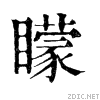
蒙 (méng, “cover, blind”) without 目 (“eye”): self-immolations are looked at without being seen. Everyone says one must live in peace to work in contentment, yet to rake in money they harm the innocent.
庙
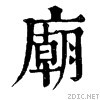
庙 (miào, “temple”) without 朝 (“pay homage”): atheism is the creed. If one fears neither ghosts nor gods, naturally one boldly plays at intrigue.
网
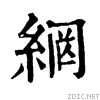
A net 网 without silk 糸 is of no use; truly many fish slip through the net. A net without silk — such a practice is unacceptable. The law is like the silk thread; replacing law with power leaves no rules.
后
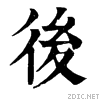
后 (hòu, “descendants”): the next generation can have only one mouth 口. When old and sick, there is no one close to rely on — truly I worry for you. Descendants were meant to be fine and many (後); this change is too heartless. Family planning as a national policy — one child over the limit, and the household is ruined.
Truly: real scholars are pushed aside, and character reform is left to the illiterate. A laughingstock for a thousand generations — only the omens hold true!
