

This English version was translated from the Chinese original with AI assistance. The Chinese text is authoritative.
Chinese has many words that can serve as general terms for all sorts of articles and things, such as 东西 (dōngxi, “thing”; literally “east-west”). The original meaning of these two characters is directions, but put together they take on many other meanings: for shopping, 买东西 (“buy things”); for cursing someone, 不是个东西 (“not a thing,” i.e. a worthless wretch); for articles, 找东西 (“look for something”) — too many examples to list. So why not use 南北 (“south-north”) instead? In fact there is a great deal of history and culture contained in this.
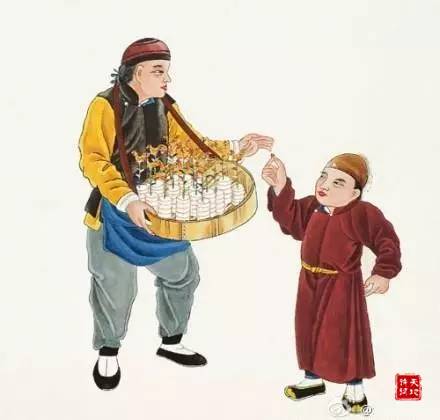
It is said that before the great Southern Song Neo-Confucian Zhu Xi took office, he had a good friend in his hometown named Sheng Wenhe, also a learned and talented man. One day the two met in an alley; Sheng was carrying a bamboo basket, and Zhu Xi asked him: “Where are you going?”
Sheng replied: “I’m going to buy some things (东西, ‘east-west’).”
Zhu Xi, a man devoted to investigating principles to extend knowledge and to scholarly research, was curious when he heard Sheng’s words and immediately asked: “You say buy ‘east-west’; why don’t you say buy ‘south-north’?”
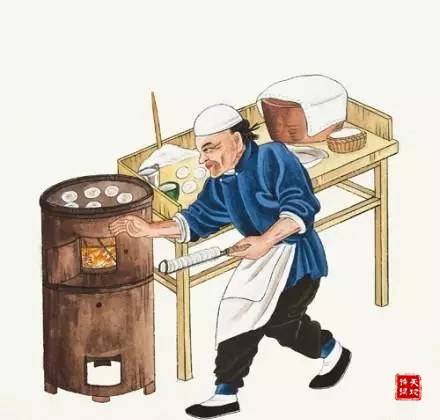
Sheng Wenhe asked Zhu Xi in return: “Do you know what the Five Phases are?”
Zhu Xi answered: “Of course I know — aren’t they metal, wood, water, fire and earth?”
Sheng said: “Right. Since you know, it’s easy. Now let me tell you: the east belongs to wood, the west to metal, the south to fire, the north to water, and the centre to earth. My basket is made of bamboo; if it held fire it would burn, if it held water it would leak dry; it can only hold wood and metal, and it is not for holding earth either. So we can only say buy ‘east-west,’ not buy ‘south-north.’”
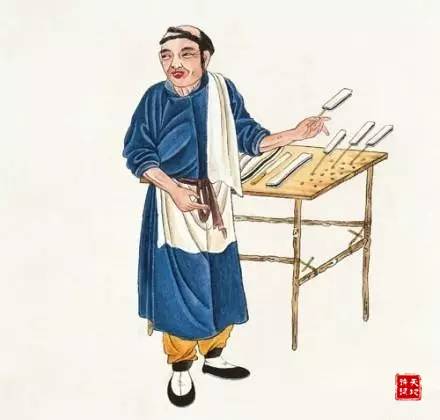
On hearing this, Zhu Xi sighed and said: “So that’s how it is!”
So the word 买东西 has such an allusion behind it; the wisdom of the ancients truly lies hidden in our daily lives.
In the Qianlong reign of the Qing dynasty, a scholar named Gong Wei held that as early as the Eastern Han, merchants were mostly concentrated in the eastern capital Luoyang and the western capital Chang’an. There was a common saying, “buy east” and “buy west,” meaning to go to the eastern capital or the western capital to purchase goods; over time, 东西 became a byword for goods.
In ancient times, the “water and fire” corresponding to “south and north,” and the “earth” corresponding to the “centre,” had no value, so there was no need to buy or sell them. The ancients regarded facing south with the back to the north as the place of honour, that is, south–north was the passage, and objects were placed on the east and west sides; when pointing to objects, one naturally pointed to the east and west, and so 东西 came to be used as the general term for articles.
And why, when cursing someone, do people say 不是东西 (“not an east-west”)?
Because if a person is not east-west, then he is south-north.
The south belongs to fire and the north to water, and in Classical Chinese “water and fire” refers to urine and excrement.
So cursing someone as 不是东西 means saying the person is urine and excrement, equivalent to the modern insult “stinking dung.”
Seen this way, the ancients’ cursing was quite skilful — taking such a long detour to curse someone, and having cursed, not letting a single dirty word pass their lips. Your poetry columnist truly admires the scholar who invented 不是东西 — brilliant!
