This English version was translated from the Chinese original with AI assistance. The Chinese text is authoritative.
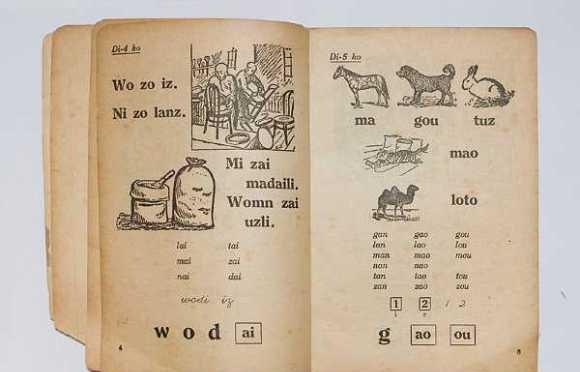
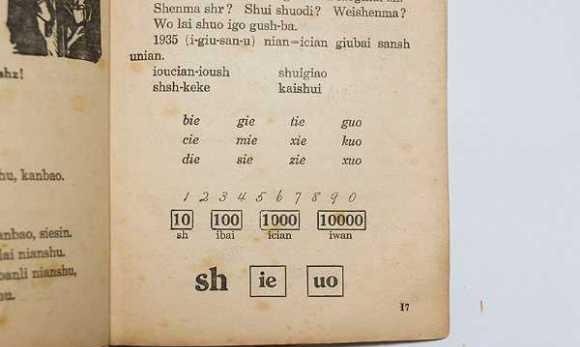
In 1931, under the impetus of Stalin in the Soviet Union, the Conference on the New Chinese Script, organized by left-wing writers manipulated by the Chinese Communist Party and headed by Qu Qiubai, was held in Vladivostok. It settled on the policy of abolishing Chinese characters altogether and replacing them with a purely phonetic script.
The work of creating the Latinized New Script for Northern Mandarin began in Moscow in 1928, carried out by the China Research Office of the Soviet Academy of Sciences. On the surface, the aim was to create a way of raising the literacy rate of the large numbers of Chinese living in the Soviet Far East and to promote their higher education; in reality, it was to prepare for Soviet expansion into Asia.
In April 1928, Qu Qiubai went to Moscow to preside over the Sixth National Congress of the CCP, which was about to be held there. This was the high point of the Soviet campaign to eliminate illiteracy, whose targets included 100,000 Chinese workers in the Soviet Far East; meanwhile, in China, the University Council of the Nanjing Nationalist Government (the Ministry of Education had for a time been renamed the University Council) officially promulgated in September 1928 the “Gwoyeu Romatzyh Spelling Rules” drawn up by the “Group of Several.” Like Lu Xun, Qu Qiubai held that Gwoyeu Romatzyh was a scheme devised by scholars in their studies, divorced from reality; and Chinese in the Soviet Union at the time also believed that teaching literacy through the Latin alphabet would be faster than education in Chinese characters. So he resolved to create a romanization scheme better suited to the masses.
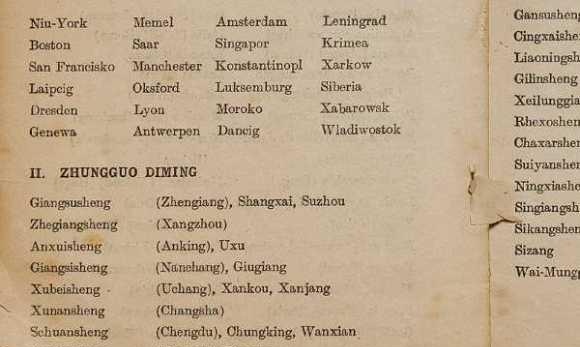
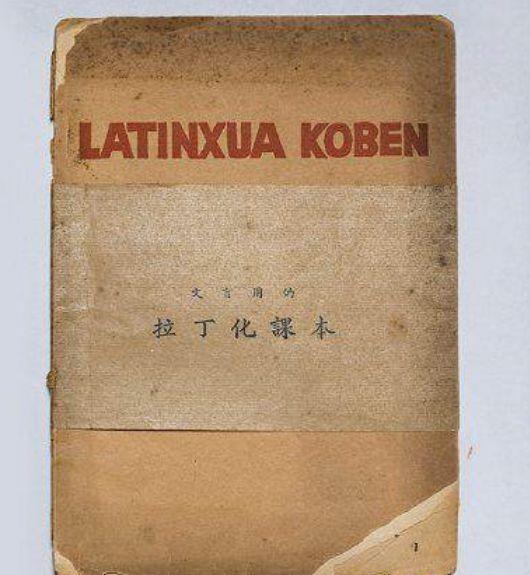
In February 1929, with the help of the Soviet sinologist Guo Zhisheng (C·B·Колокопов) and drawing on earlier schemes, Qu Qiubai drew up the “Draft Chinese Latin Alphabet”; in October the scheme was finalized and eventually named “The Latinized Chinese Alphabet.” In the spring of 1930, “The Latinized Chinese Alphabet,” signed Qu Weituo, was first published in issue 2 of the Moscow journal Chinese Problems, and then issued as a separate pamphlet by the press of the Communist University of the Toilers of China, arousing a great response. The pamphlet was printed in Chinese characters, the Latinized New Script and Russian, and its content covered three areas: first, the difficulty of learning Chinese characters and the possibility of romanizing Chinese writing; second, whether tones need to be marked; and third, the scheme and its spelling rules.