

This English version was translated from the Chinese original with AI assistance. The Chinese text is authoritative.
When educating their children, the vast majority of parents think that lecturing them earnestly is education, without realizing that the results of their own behavior are often the opposite of what they wish.
Of the two lists below, how many people do you know?
The first list: Fu Yijian, Wang Shidan, Bi Yuan, Lin Zhaotang, Wang Yunjin, Liu Zizhuang, Chen Hang, Liu Fuyao, Liu Chunlin.
The second list: Cao Xueqin, Hu Xueyan, Li Yu, Gu Yanwu, Jin Shengtan, Huang Zongxi, Wu Jingzi, Pu Songling, Hong Xiuquan.
On which list do you know more people?
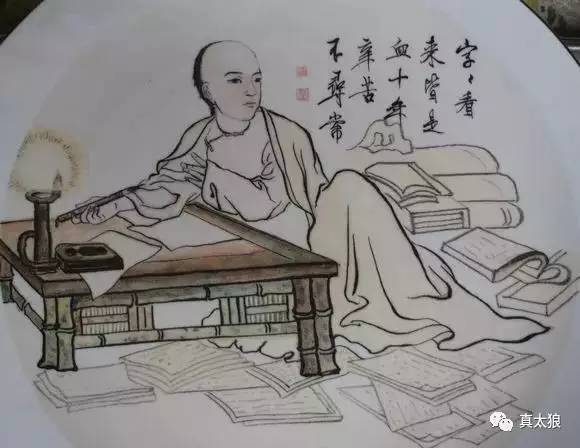
The former were all top scholars (zhuangyuan) in the Qing imperial examinations;
the latter were all xiucai who failed the examinations in their time.
Life holds limitless possibilities!
I offer this article to comfort all examinees and their parents.
The real examination hall has never been in school!
Whatever the result of the college entrance exam, stay calm!
After the college entrance exam ended, a head teacher sent a group text message to parents:
Whatever the results, there is no distinction between good and poor students. Parents know that every child is a seed, only each blooms at a different time. Some flowers burst into brilliant bloom right from the start, while others require a long wait.
Don’t stare at other people’s flowers, and don’t think other people’s are always better. Trust that each flower has its own season; care for it attentively and watch it grow little by little. Isn’t that a kind of happiness too? Perhaps your seed will never flower, because it is a towering tree.
There is a teacher in China whose class of 55 students sent 37 to Tsinghua and Peking University and 10 to world-famous universities such as Cambridge, Yale and Oxford on full scholarships, while the rest were admitted to universities such as Fudan and Nankai.

Not only that: six sports and arts championships, including the school football championship, the overall school sports meet championship and the overall school web design competition championship, were all won by this class; musical talents, debating masters, computer whizzes and taekwondo experts abounded in it.
He is also a very successful father; his daughter was admitted to Peking University with excellent grades. He is Wang Jinzhan, a National Outstanding Teacher and mathematics teacher at the High School Affiliated to Renmin University.
The following is the educational experience Mr. Wang has summed up. Every parent is strongly advised to spend about three minutes reading it; savor it carefully and you will surely benefit greatly!
01. The main factor affecting a child’s grades is not the school but the family.
02. If something goes wrong with family education, the child may have a rather hard time at school and is very likely to become a “problem child” there.
03. Children with good grades usually have mothers who are organized and efficient. The more conscientious, orderly and polite the father, the better the child’s grades.
04. Poverty is an important educational resource, but it is not true that the poorer the family, the better for the child’s growth. Parents need to provide their children with basic cultural materials and not let them fall into the abyss of low self-esteem where poverty saps ambition.
05. Wealth is another, higher-level educational resource. The Western experience is: “It takes three generations to raise an aristocrat,” and “Class is hereditary.” But higher-level educational resources require higher-level educational skills; without them, a wealthy family can instead bring disaster to a child’s growth.
06. Don’t be a parent with knowledge but no culture. Some people have advanced degrees but are not necessarily cultured. If parents do not know how to live, do not know how to treat others well, or even how to treat their own children well, then however high their academic level, they are uncultured people.
07. Parents may make their child the center of the world, but they should not forget that parents also need to live independent lives. If parents revolve entirely around the child and have no theme of their own in life, such parents often interfere with the child’s growth in the name of love. Sometimes it is not that the child cannot do without the parents, but that the parents cannot do without the child.
08. Parents need to take responsibility for educating their children, but they should not give up their own leisure entirely for the sake of it. “Without a sense of responsibility you hurt others; with too much of it you hurt yourself.”
09. If parents rush to pick up their child whenever he cries and fusses, the child will exploit this trait to pester them often and make more demands. So when a child cries and fusses, don’t hurry to pick him up; parents had best keep themselves busy and let the child watch them get things done briskly.
10. The relationship between husband and wife affects the child’s character. If a man does not respect his wife, his son learns not to respect his female classmates at school. If a woman does not respect her husband, her daughter learns to look down on her male classmates at school.
11. Education is cultivating a person’s spiritual countenance. The mission of parents and teachers is to let children gradually take responsibility for their own spiritual countenance, remove whatever filth they may have picked up, and cultivate the spiritual “seeds” within them, so that they can breathe mountain air and hold their heads high.
12. Cultivated parents are “Voltaireans”: “I disagree with what you say, but I will defend to the death your right to say it.” From the day their child is born they begin reasoning with the child and patiently asking for the child’s opinion. Don’t expect that beating and scolding will teach a child obedience. The result of killing the chicken to scare the monkey is that the monkey learns to kill chickens too.
13. Let your child become a person of both passion and reason. “Without passion no great undertaking can begin well; without reason no heroic deed can end well.”
14. Let your child become a well-mannered person. Good manners begin with being punctual, waiting in line, not talking loudly in public and not losing one’s temper easily.
15. Be kind and generous. If your child is rather kind and generous, please do not mock his weakness. People who like to take small advantages often suffer big losses, because others dislike them. People who are willing to accept small losses will gain big advantages in the future, because others like them.
16. Physical vitality brings mental vitality. People in good health have sunny dispositions. People in poor health are hesitant and evasive in what they do and hem and haw when they speak.
17. Don’t think that ages 1 to 6 are only for growing the body. If parents let a child spend ages 1 to 6 with grandparents and only take the child back at 6 to start primary school, the child will become either a silent, speechless type or a lawless troublemaker in primary school.
18. Often do three things together with your child: first, eat meals together; second, invite the child to help repair toys, furniture or clothes, and occasionally invite the child to help solve difficulties at work; third, tell the child stories and invite the child to tell stories too.
19. Unless it is especially difficult, parents had best come home every day to eat with their children. A family’s shared values are built as the whole family eats around one table.
20. Tell your child stories and invite the child to tell stories, so that reading and writing habits are built starting with listening to stories; let the child learn to read independently as early as possible and form a lifelong reading habit as early as possible. “Anyone who still reads will never fall completely; those who have fallen completely do not read.” Parents who never tell their children stories are irresponsible parents.
21. There are three critical periods in a child’s growth: the first around age 3, the second around age 9, and the third around age 13. Missing a critical period brings endless trouble later.
22. Not “at thirty I stood firm” but “at three I stood firm.” Around age three, a child must build the courage and habit of self-reliance. Whatever he can do himself, he must do himself; whatever he should do, he should do his best to do.
23. If at 13 your child likes Frost’s lines “Two roads diverged in a wood, and I took the one less traveled by,” that is perfectly normal; don’t worry, he may later choose the one more traveled.
24. It is necessary for parents to reason with their children, but when reasoning with a child around age 13, pay attention to your manner of speaking; manner matters more than reasons. Otherwise the child will be repelled and resist. The child will say: everything you say is right, but the way you say it is very annoying.
25. Secrets of the heart are a sign of a person’s growth and maturity. If your child has something on his mind that he does not want to tell you, do not force him to reveal his secret.
26. Around age 3, a child is best served by a non-interfering, permissive parent. Around age 9, by an active, authoritative parent. Around age 13, by a passive, democratic parent. Effective education is strict first and lenient later; ineffective education is lenient first and strict later.
27. You must keep an eye on your child’s grades, but you need not care too much about his ranking. In fact, be wary of children who always come first. Some children have good grades and good characters; some have excellent grades but are selfish, lack compassion and have no zest for life.
28. You must let your child learn to get along with others and gladly accept playmates. “If parents are dissatisfied with their neighbors and very picky about their child’s playmates, or do not let their child make friends with them, making the child feel very different from everyone else, then these children will find it hard to get along naturally with anyone when they grow up.
29. A child’s growth needs companions. Let your child have his own friends, but not too motley a crowd; before the child has formed mature reason and judgment, be careful that he does not pick up companions’ bad habits.
30. Let your child form a healthy aesthetic sense as early as possible. A promising man will surely like healthy women. Don’t let your child’s aesthetic sense sink into the low and the sickly. Don’t think that whatever is small and sickly is good, or that whatever is strong is bad. Don’t think little sparrows, little lambs and little dogs are all lovable, nor that lions, tigers and wolves are all bad. Don’t think jackals and wolves all eat people; jackals and wolves only eat what is weaker than they are.
31. The Catcher in the Rye contributed a word to the world: watching over (守望). Education is neither controlling nor leaving alone. Between controlling and not controlling, there is a word: “watching over.”
32. Tell your child: children who listen attentively in class sometimes get good grades; children who study conscientiously on their own always get good grades.
Education means one tree shaking another tree, one cloud pushing another cloud, one soul awakening another soul.
Parents and children are like a big tree and a small tree, separate from yet close to each other. The big tree must shield the small tree from wind and sand, but must also leave the small tree enough space to feel the sunlight and breathe the air. Only then can the small tree stretch freely and grow strong in its own space. A small tree too close to a big tree cannot grow into a towering tree, while a small tree far from the big tree must face the wind and sand alone; though exceptionally strong, it is very easily twisted or dies young.
Every child is a seed;
please allow them to stumble along the road of growth.
Wait patiently:
the seed will surely grow into a towering tree!
The real examination hall
has never been in school!
