

This English version was translated from the Chinese original with AI assistance. The Chinese text is authoritative.
After more than ten years of hardly writing by hand, typing on a keyboard has made me forget how to write many characters. It is not just picking up a pen and forgetting a character: sometimes, when I need one, I suddenly find I cannot even write the most basic Chinese characters, and miswritten characters are all too common. So it pays to look regularly at how certain characters are written, to avoid embarrassment when the time comes.
No. 1: 冒
Which is the most commonly miswritten character? It is not one of those rare, obscure characters, nor one of those easily confused look-alikes, but the 冒 (mào) of 感冒 (gǎnmào, “to catch a cold”) and of 冒险 (màoxiǎn, “to take a risk”)!
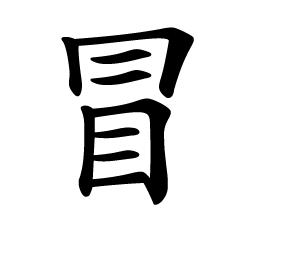
The vast majority of people think the top of 冒 is 曰 (yuē) and the bottom is 目 (mù, “eye”). That is exactly the mistake: the top of 冒 is not 曰 but 冃.
This 冃 is read mào. It differs from 曰 in that its two inner horizontal strokes do not connect to the other strokes.
In ancient script 冃 was a pictographic character: a drawing of an ancient hat, the two horizontal strokes being ornaments on the hat.
The earliest form of 帽 (mào, “hat”) was simply 冒, without the 巾 (jīn, “cloth”) of a headscarf. Because 冒 also carried other senses and was overburdened, people later added 巾 to 冒, creating the phono-semantic character 帽, and the two divided the work: 冒 took charge of meanings such as “to emerge outward,” while the sense “hat on the head” was handed over to 帽.
From this we can see that the evolution of 帽 runs: 冃 → 冒 → 帽.
No. 2: 周
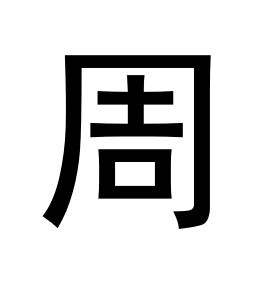
In 周 (zhōu), the part above 口 is 土, not 士. Have you been writing it wrong for years?
No. 3: 肺
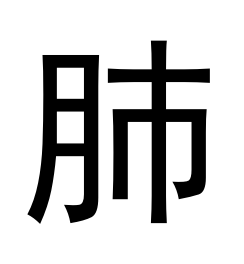
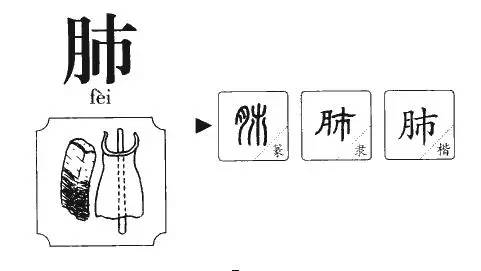
The right side of 肺 (fèi, “lung”) is not the character 市; its vertical stroke runs straight through from top to bottom!
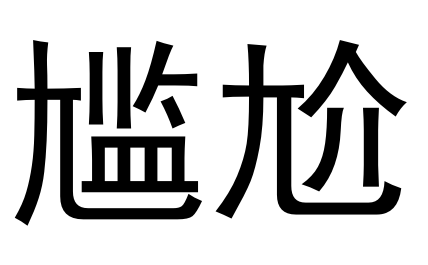
No. 4: 尴尬
The left side of 尴尬 (gāngà, “awkward”) is not 九 but 尤 without its dot. Write the left part as 九 and things get awkward!
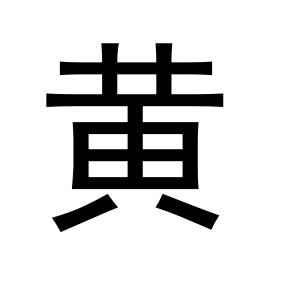
No. 5: 黄
The middle of 黄 (huáng, “yellow”) is 由, not 田
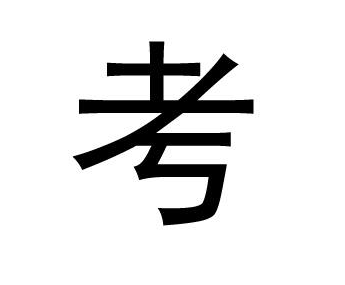
No. 6: 考
The lower half of 考 (kǎo, “to test”) is the right half of 巧, so the horizontal stroke is written first, then the vertical-bend-hook.
Chinese characters are broad and profound. Every stroke embodies the painstaking effort of our ancestors, and every stroke has its origin. As their descendants we must never invent forms at will; only by deeply understanding the meaning of Chinese characters can we write standard characters conscientiously and well!
