


This English version was translated from the Chinese original with AI assistance. The Chinese text is authoritative.
Children copy what they see. For a child, the parents are a mold: whatever the mold is like, so is the child that comes out of it. Parents’ teaching by word and example is extremely important to children. Most of a child’s bad habits come from the parents. Below are problems in five main areas that affect a child’s growth.
So, parents, please look carefully at these 5 bad habits: correct them if you have them, and guard against them if you don’t.
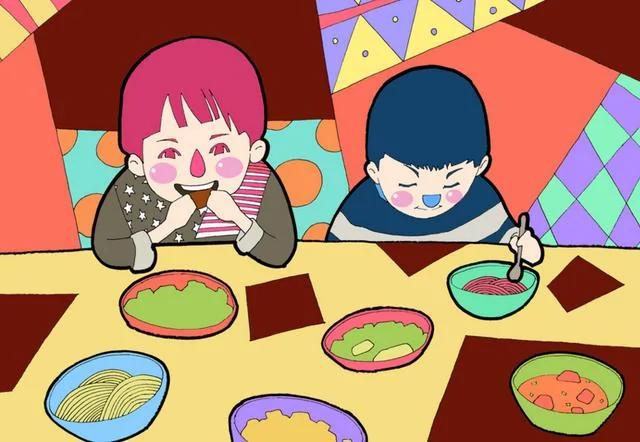
1. About eating
Many families do not have the habit of eating breakfast. On school days, the child just buys something to eat outside, with no nutrition at all.
At the weekend, the whole family gets up only at noon and then eats breakfast and lunch together, and the child, following the parents, develops the habit of not eating breakfast properly.
But breakfast is the meal that comes after the longest gap since the previous one. After a whole night, the food in the stomach has all been digested; if one does not eat breakfast promptly, symptoms such as low blood sugar, dizziness and nausea easily appear.
Over the long term, the child’s mental alertness will be reduced throughout the morning: unable to concentrate in class, not listening attentively, and drowsy.
Also, don’t let the child eat too much, because when one eats too much the brain becomes sluggish; the child’s brain cells will age prematurely and intelligence will decline, making the child duller and duller.
So parents should make sure every meal the child eats is good and filling, but not too filling.
2. About sleep
Many young parents have the habit of staying up late — binge-watching shows, surfing the internet, watching TV — and the child is unconsciously influenced and develops the bad habit of staying up late too.
But the child is in a period of growth and development; staying up late over the long term not only affects height and immunity and brings on unhealthy symptoms.
More importantly, because the child is short of sleep, he will naturally be drowsy in class, his brain cells will be inactive, his intellectual development will be affected, and his grades will fall.
At the same time, don’t let the child sleep until noon; sleeping too long easily leaves the head foggy, which is bad for brain development.
So help the child develop the good habit of going to bed early and getting up early — no staying up late, no lying in.

3. About reading
Reading is the best way to exercise a person’s thinking, because in the process of reading one is constantly in a state of thought, and the brain cells become active.
We parents always ask our children to read more, yet play on our phones and games in front of them, not realizing that this behavior also affects the children.
If the parents do not love reading, then in this atmosphere the child naturally will not come to love reading either; if the parents love reading, they will surely have a child who loves to read.
A child who loves reading has active brain cells; a child who does not, not using the brain for long periods, will speed up the brain’s decline and gradually grow dull.

4. About modesty
I wonder whether you mothers have come across this scene:
Mother A: “So this is your child — looks so clever! Must have great grades — a real promising one!”
Mother B: “You flatter us. Our child is a bit slow, and his grades are just average — not as smart as yours.”
Parents show modesty in front of others and then say “bad things” about their own child. Although the adults understand what is meant, the child is too young to grasp the deeper meaning and only receives: Mom says I’m stupid.
If the child receives this kind of message over a long period, it becomes a kind of psychological suggestion; he feels he is stupid and gradually becomes negative.
So parents should watch their words in front of the child and not often belittle the child in front of others.

5. About early education
Nowadays more and more parents are paying attention to early education. As soon as the baby is born, they start planning this enrichment class and that one.
But some parents easily go wrong on early education; most are too eager for quick results, too impatient for success, and blindly follow the crowd.
They always set very high goals for the child, and when the child fails again and again to reach the goals the parents set, he becomes less and less confident and loses more and more of his fighting spirit.
Finally, for the sake of the child’s physical and mental health and a bright future, parents should pay more attention to their own words and conduct and get rid of some bad habits.
Create a positive, active and healthy environment for the child to grow up in, influence the child imperceptibly, and fully prepare the way for the child to become “smart.”
