

This English version was translated from the Chinese original with AI assistance. The Chinese text is authoritative.
Two thousand years ago, Confucius advocated teaching students according to their aptitude. In his teaching, Confucius often came to know his students’ aspirations, thoughts, words and deeds through conversation and observation. Only by understanding children’s minds in education can we truly achieve the aims of teaching and nurturing people.
When you see your child bouncing and whooping on the bed, treating the floor tiles as a drawing board, or squeezing into a cardboard box to race a car, what is your first reaction? I believe you won’t think these are a child’s pranks; after all, in their eyes there is not yet any concept of a bed, floor tiles or a cardboard box.
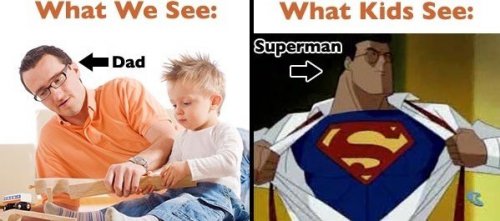
The blogger behind the popular American humour blog Pleated-jeans saw the contradiction contained in this: what children see is often worlds apart from the world in adults’ eyes. With the following set of comparison pictures he humorously reveals this phenomenon (on the left is our perspective, on the right the child’s):





(All of the above are images from the web)
If you are a parent, looking at these amusing comparisons you have probably laughed more than once, thinking of how your child sees the world. Whether it is looking up at the clouds and seeing an elephant, or their understanding of science being that Santa Claus appears on the roof, and so on — children and adults live in different worlds.
Who says they are wrong? Many times we all want to go back to living in that world of the child, a life of innocence and simplicity. We should recognize this as children’s vivid imagination, which lets them perceive things differently; in fact, they can perceive more than this.
According to a new scientific study from the University of Sheffield in Britain, children really do see the world differently, and it is not until they are about 13 that their view of the world slowly approaches that of adults.
Jeff’s cartoons amusingly sketch how differently children see things from adults.
