

This English version was translated from the Chinese original with AI assistance. The Chinese text is authoritative.
“Half a jin, eight liang” (半斤八两) is an idiom describing two things that are just the same. Why is that?
We say “a pair of chopsticks” (一双筷子), not “two chopsticks” (两根筷子). Why is that?
01. Why was one jin set at sixteen liang?
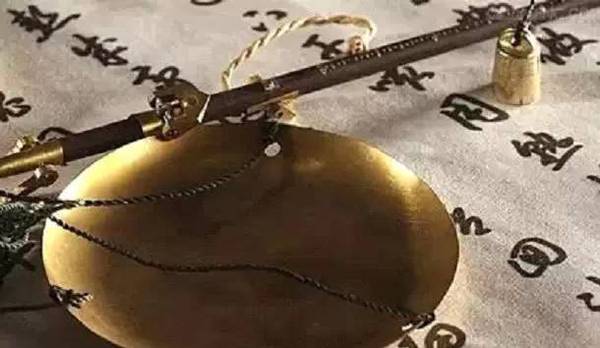
It turns out that the steelyard our ancestors used had sixteen liang to the jin, so half a jin and eight liang were the same. Then why did our ancestors set one jin at sixteen liang?
There is great wisdom in this!
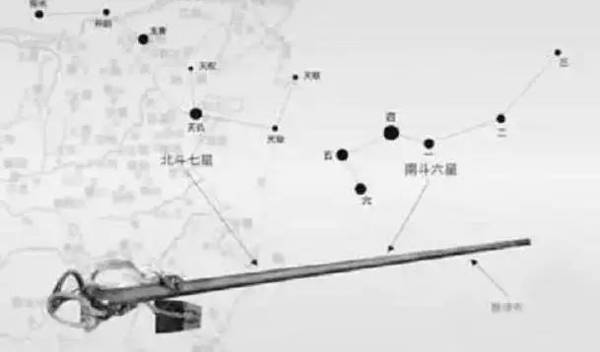
There is a classic explanation. Legend has it that our forebears observed the seven stars of the Northern Dipper and the six stars of the Southern Dipper; adding the three stars of Fortune, Prosperity and Longevity nearby makes exactly sixteen stars. The seven stars of the Northern Dipper govern death, the six of the Southern Dipper govern life, and the three stars of Fortune, Prosperity and Longevity each govern one of these in a person’s life. From heaven they watch everything people do.
Hence the saying: as people act, heaven is watching.
It is said that a merchant who gave short weight when weighing goods would be punished. Short a customer by one liang, and the Star of Fortune would reduce that person’s fortune; short by two liang, and the Star of Prosperity would reduce his prosperity; short by three liang, and the Star of Longevity would shorten his life.
The ancients all knew that “as people act, heaven is watching.” This kept them in awe and reverence, so that they dared not act against their conscience.
02. Why are chopsticks 7 cun 6 fen long?
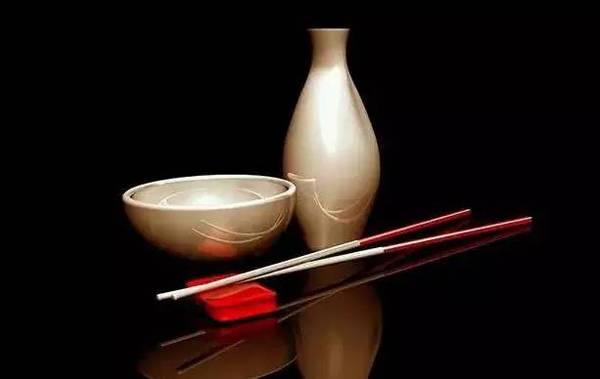
The standard length of chopsticks is seven cun six fen. Some say this represents the seven emotions and six desires of human beings, showing that people are fundamentally different from animals. Some people greatly admire Westerners for eating with knife and fork, feeling that this posture and manner show good taste. But having learned it, they use it only occasionally.
The key point is that chopsticks are two sticks, yet they are called a pair. Someone in a restaurant who calls to the waiter “bring a pair of chopsticks” is surely Chinese; someone who says “bring two chopsticks” is surely a foreigner.
Why are they called a pair of chopsticks when they are clearly two sticks? One explanation is that this embodies the ideas of the Supreme Ultimate (太极, Taiji) and of yin and yang. The Supreme Ultimate is one, yin and yang are two; one is two and two is one; one contains two, and two combine into one. This is the philosophy of the Chinese.
Using chopsticks calls for coordination and harmony. Chopsticks can also be used for acupressure, massage and scraping (guasha). In the old days, people traveling the land needed only a pair of chopsticks to treat whatever ailment they had. Even if they forgot them, they could snap off a twig or a reed, break it to length, grind it on a stone and wash it in water, and it would serve.
Both Chinese and Western civilization originated in myth. Later, in the West, humans and gods parted ways: for doing things one relied on science, for being a person one relied on religion.
China did not. In China everything is joined together: He Xiangu, Iron-Crutch Li, Lü Dongbin, Sun Wukong, Zhu Bajie and others, these legendary immortals are also people, living among the vast sea of humanity. For the Chinese, ideals and reality, soul and body, are likewise united as one. This is a kind of broad understanding and wisdom.
Thus, historically, the Chinese did not need to go to a special place to cleanse their souls. From childhood, elders taught them how to conduct themselves and how to do things, and they knew that only by being a good person can one do things well. The two cannot be separated either.
In the course of the full contact, exchange and collision between Chinese and Western civilization, much that people merely parrot from one another interferes with our value judgments, until a riot of flowers begins to dazzle the eye, the mind is unsettled and one is at a loss. A Westerner once said that when the day comes that China’s young people no longer believe in the teachings of their ancestors and their traditional culture, we will have won without a fight.
The green pine has the beauty of uprightness; fresh flowers have the beauty of delicate color. Western and Chinese civilizations are two flowers in bloom, each with its own character. We should neither favor one and slight the other, nor attend to one and neglect the other.
A pair of chopsticks is not just tableware; it carries much of traditional Chinese culture and condenses much of the wisdom of those who came before us. How much one grasps of it is up to each person.
