

This English version was translated from the Chinese original with AI assistance. The Chinese text is authoritative.
Chinese civilization has a long history, so many places have changed their names several times over the ages. It has to be said that some of these changes are really bad, okay! Perhaps only after reading this will you realize how much charm your hometown had before it was renamed!
Level 1: Beyond Endurance
Runan (汝南) → Zhumadian (驻马店, “horse-stopping inn”)
Personally I think this is the worst renaming of all, bar none! Remember, this was the hometown of Yuan Shao, whose family produced “three ducal ministers in four generations.” Yes, that’s right. Just imagine Yuan Shao saying: “I am the young master of the Yuan family of Zhumadian, three ducal ministers in four generations…”
Likewise: Langya (琅琊) → Linyi (临沂) (hometown of Zhuge Liang); Jiuyuan (九原) → Baotou (包头) (hometown of Lü Bu); Changshan (常山) → Shijiazhuang (石家庄) (hometown of Zhao Yun); Youzhou (幽州) → Baoding (保定) (hometown of Zhang Fei)…
Imagine these people meeting:
“Hello everyone, I’m Lü Bu from Baotou.”
“Hello everyone, I’m Zhao Yun from Shijiazhuang.”
“Hello everyone, I’m Zhang Fei from Baoding.”
“Hello everyone, I’m Zhuge Liang from Linyi.”
“Hello everyone, I’m Yuan Shao from Zhumadian…”
…
Sorry, I really can’t go on; the picture is just too beautiful…
Level 2: Laughing at the Sky
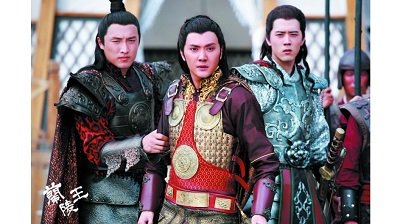
Prince of Lanling? No, I’m the sorry Prince of Zaozhuang. (Image from the web)
Lanling (兰陵) → Zaozhuang (枣庄, “jujube village”)
What grudge do I have against you! The whole style is different now… “The fine wine of Zaozhuang, fragrant with tulips,” “the fine wine of Zaozhuang in luminous cups,” “the Scoffing Scholar of Zaozhuang”; the handsome Prince of Lanling will now have to be called the Prince of Zaozhuang, “The Prince of Zaozhuang Enters the Battle”: I have fallen in battle…
Luzhou (庐州) → Hefei (合肥, “joined fat”)
Yes, the Luzhou of “Luzhou moonlight spills upon my heart,” hometown of Bao Zheng, Li Hongzhang and others. After the renaming, the gifted scholars of Luzhou became the gifted scholars of Hefei, and “I am Bao Zheng of Hefei”… Not to mention that Hefei’s own tourism slogan is “Two fatties welcome you”; its self-mockery is downright heartbreaking…
Level 3: Wringing One’s Hands and Sighing
1. Huizhou (徽州) → Huangshan (黄山)
Supposedly to highlight its tourism resources… “All my life I have been enchanted; even in dreams I never reached Huizhou” is simply gone… What’s more, Huizhou is the emblem of a whole series of cultural symbols: Hui merchants, Hui cuisine, Hui-style architecture, Huizhou culture… Anhui (安徽) is called Anhui precisely because of Anqing (安庆) and Huizhou (徽州), you know. It is said that some people are now clamoring to rename Chizhou as Jiuhua City; one might as well rename Anqing as Tianzhushan City too, to show that the people of Anhui have three great mountains; and rename Anhui Province as Anhuang or Anshan Province, giving up on treatment altogether.
2. Chang’an (长安) → Xi’an (西安)
Chang’an, what a beautiful name! The starting point of the Silk Road, taken from the meaning “lasting order and enduring peace.” “Buying flowers and carrying wine into Chang’an,” “A sliver of moon over Chang’an, the sound of ten thousand households beating clothes,” “The one who shared my heart has gone, and suddenly Chang’an feels empty,” “Endless longing, in Chang’an”… How many people’s dreams of the Tang dynasty grew out of this name? Well, now it has been changed to Xi’an. Forgive me, all I can think of is Xi’an’s roujiamo meat sandwich…
3. Yunzhong (云中) → Togtoh (托克托). Yes, “Bearing the imperial tally to Yunzhong, when will Feng Tang be sent?” refers to this very place. Bearing the tally to Togtoh… ahem…
4. Xuanwu District (宣武区) and Chongwen District (崇文区) → Xicheng District (西城区) and Dongcheng District (东城区). These are two districts of Beijing. It is said that when they were abolished and merged, many residents, especially old Beijingers, objected, but could not stop it. Two names so steeped in history really did become history. One netizen protested: “No more proclaiming the martial (宣武), no more honoring the literary (崇文); only east and west (东西, also ‘things’) remain.”
Level 4: Something Missing
Some place-name changes can’t exactly be called bad, but one always feels something is missing.
1. Yuzhou (渝州) → Chongqing (重庆)
That is the Yuzhou of “Longing for you, unseen, I sail down to Yuzhou.” Now it is called Chongqing; Yuzhou still seems to have more feeling.
2. Qinchuan (琴川) → Changshu (常熟)
3. Yongjia (永嘉) → Wenzhou (温州)
Historically Yongjia was also famous and highly literary, as with Xie Lingyun, Prefect of Yongjia.
4. Zhuanyu (颛臾) → Pingyi (平邑)
It is the state in “The Ji Family Is About to Attack Zhuanyu,” whose main duty was offering sacrifices to Mount Meng. Now it is called Pingyi…
5. Mianyang (沔阳) → Xiantao (仙桃)
In ancient times a place every army fought for, part of the ancient Yunmeng Marsh, a famous water country of wetlands. In 1986 it quietly became “Xiantao City.”
6. Luling (庐陵) → Ji’an (吉安)
Everyone surely knows Luling: “Ouyang Xiu of Luling” took up quite a bit of our youth. Besides, it was the hometown of Wen Tianxiang. Now it is called Ji’an; “auspicious and peaceful” isn’t bad as such, but netizens mock it as “so earthy that throwing it on the ground would raise a few ounces of dust.”
7. Pingyang (平阳) / Yaodu (尧都) → Linfen (临汾)
Pingyang was the hometown of Wei Zifu, empress of Emperor Wu of Han, of the Grand Marshal Wei Qing and of General Huo Qubing; Emperor Wu’s elder sister was called Princess Pingyang because she married the Marquis of Pingyang. Now it is called Linfen… At the very least you could have called it Yaodu.
8. Hedong (河东) → Yuncheng (运城)
Yes, the place of “Liu Hedong” (Liu Zongyuan). “Liu Yuncheng”: tsk tsk…
9. Yunzhong (云中) → Datong (大同)
Look familiar? Yes, besides Togtoh, this place too was called Yunzhong. You must know the famous Sixteen Prefectures of You and Yun; the Yun is this place. The Sixteen Prefectures of You and Da…
10. Jinling (金陵) → Nanjing (南京)
The Twelve Beauties of Nanjing, Climbing the Phoenix Terrace of Nanjing…
11. Guangling (广陵) → Yangzhou (扬州)
Actually the name Yangzhou sounds nice too, but Guangling still feels cooler! Perhaps it’s the suggestion of Guangling San: one tune of Guangling, and the whole world knows it!
12. Dangtu (当涂) → Ma’anshan (马鞍山)
This is where Li Bai passed away, and there is Li Bai’s tomb at Dangtu…
13. Kuaiji (会稽) → Shaoxing (绍兴)
Shaoxing actually sounds nice too; it’s just that the Preface to the Orchid Pavilion Poems is far too famous!
14. Chong’an (崇安) → Wuyishan (武夷山)
Another victim of tourism development. Go and have a cry with Huizhou…
15. Yuegang (月港) → Zhangzhou (漳州)
For some reason, Yuegang (“Moon Harbor”) really gives a poetic, tranquil feeling; I can’t be the only one who feels this way…
16. Yiling (夷陵) → Yichang (宜昌)
Yiling originally took the meaning “here the mountains level out (夷), here the waters rise into hills (陵).” Yichang is not a bad name either, but it lacks some charm.
17. Jia County (葭县) → Jia County (佳县)
Supposedly because people were afraid no one could read it… Give me back my “The reeds are lush and green (蒹葭苍苍), the white dew turns to frost”! And also Hu County (鄠县) → Hu County (户县), and Fuzhou (鄜州) changed to Fu County (富县). Argh! That’s the place of “Tonight, the moon over Fuzhou”!
18. Zhouzhi (盩厔) → Zhouzhi (周至)
In classical Chinese, mountains encircling is called 盩 and waters bending is called 厔; mountains encircling and waters winding make 盩厔. That is, the place name came from having both mountains and water. What on earth is 周至? Just for ease of reading, I suppose…
19. Jianning (建宁) / Zhuzhou (槠洲) → Zhuzhou (株洲)
At the end of the Han, Sun Quan established Jianning County here, signifying “building peace on the frontier,” hence the name Jianning. It was called 槠洲 because there were many sandbars (洲) and chinquapin trees (槠) here. Presumably also for ease of reading, it ended up this unbearable…
20. Yangquan (漾泉) → Yangquan (阳泉)
漾泉: “there are five springs that well up (涌漾) all year round, moistening the region, hence the name 漾泉”; this is the origin of the ancient name. Now…
21. Changping (长平) → Gaoping (高平)
The Battle of Changping is where, as the Records of the Grand Historian famously records, Bai Qi buried alive four hundred thousand Zhao soldiers. Now it is called “Gaoping City.”
22. Chanyuan (澶渊) → Puyang (濮阳)
The place where the lords of Jin, Qi and other states met in alliance in the twelfth year of Duke Xiang, and also the place of the Song–Liao Treaty of Chanyuan.
23. Liquan (醴泉) → Liquan (礼泉)
“Heaven sends down sweet dew, earth brings forth sweet springs (醴泉),” from the Book of Rites. Changed to what it is now just for convenience?
24. Guangji (广济) → Wuxue (武穴)
Guangji, “saving all under heaven”: tsk tsk, how majestic! Why change it to Wuxue? Where does that name even come from?
25. Junzhou (均州) → Danjiangkou (丹江口)
26. Yunyang (郧阳) → Shiyan (十堰)
27. Xiangyang (襄阳) → Xiangfan (襄樊) → Xiangyang (襄阳)
Whatever channel you learned of it through, Xiangyang is a famous historic city, while the name Xiangfan came from merging Xiangyang and Fancheng. Anyway, it has now been changed back!
28. Jiangling (江陵) → Jingzhou (荆州)
Everyone surely knows “A thousand li to Jiangling, back in a single day”!
29. Wuling (武陵) → Changde (常德)
Made famous by Tao Yuanming’s Peach Blossom Spring, in everyone’s eyes it is simply a byword for the “Peach Blossom Spring.” Changde: why change to a name with far less renown?
30. Zhangyuan (张垣) → Zhangjiakou (张家口)
Zhangyuan is just the more elegant old name. But if I were from Zhangjiakou, I’d rather still call it Zhangyuan. The same goes for Yingcheng, now called Pingdingshan.
31. Xunyang (浔阳) → Jiujiang (九江)
No particular reason; it’s just that thinking of “Seeing off a guest at night by the Xunyang River” brings to mind the story of a poet and a pipa girl, “both of us fallen to the ends of the earth.”
32. Fengtian (奉天) / Shengjing (盛京) → Shenyang (沈阳)
I don’t know why, I just think the name Fengtian is so majestic! Don’t you? What about you, friends from Shenyang?
33. Zhaoge (朝歌) → Qi County (淇县)
Zhaoge, the old capital of two dynasties! Anyone who has watched Investiture of the Gods surely knows it! And it’s a lovely name: singing loudly every morning.
34. Chencang (陈仓) / Fengxiang (凤翔) → Baoji (宝鸡)
“Secretly crossing at Chencang” becomes “secretly crossing at Baoji”……
35. Tongqiu (桐丘) → Fugou (扶沟)
36. Jinxi (锦西) → Huludao (葫芦岛)
