

This English version was translated from the Chinese original with AI assistance. The Chinese text is authoritative.
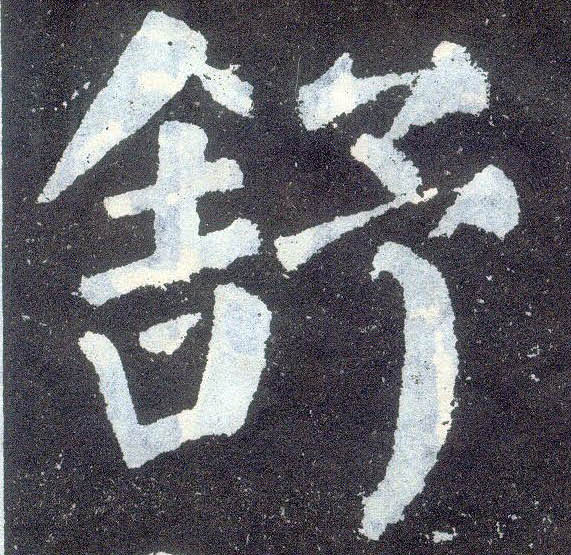
The common notion today is: the more you own, the more comfortable your life. Money is never too much, food is never too fine, wealth is never too great, a house is never too big. In fact this is already heading in the opposite direction from one’s goal, and life becomes less and less comfortable. The ancient forebear Cangjie already gave a clear indication of what comfort is in the character 舒 (shū, “at ease, comfortable”).
The character 舒 in 舒服 (“comfortable”) has on its left the character 舍 (shě, “to give up, let go”) and on its right the character 予 (yǔ, “to give”). Cangjie is telling us that if we want to live comfortably, we must know how to let go and how to give.
China has had wise people since ancient times. In the Ming dynasty there was a master, Zhang Sanfeng, who all his life cared little for fame and gain and cultivated his body and nature. Legend has it that at the age of one hundred and thirty and again at one hundred and seventy he was summoned by the emperor and twice declined to go, sending back only a poem.
The poem says:
Laughing heartily, I break into song,
Carefree and tipsy, I dance amid mist and waves.
Wrapped in my fisherman’s cape, I walk the mountain slopes;
At dusk the rivers and hills hold many joys.
I pass beyond the village in the slanting sun —
Who knows me, swaying drunk as I dance?
Taijiquan, which people know so well today, was created by Zhang Sanfeng; it has spread widely and made a great contribution to society. Zhang Sanfeng loved to roam the four seas; he had no gold, silver or treasure, no rich material life, yet he lived free and at ease. This also shows something: whether a person lives comfortably does not depend on how much you can own, but on how much you can let go.
In today’s society, people’s pursuit of money and material things fills relations between people with rivalry and coldness, and the living environment is tense and fierce. Although we all live in the real world and cannot withdraw from worldly life as the ancients did, if we often take care to adjust our state of mind — take money and material things a little more lightly, give a little care to those around us, and master a way of life of letting go and giving — we will surely be able to live comfortably, far more at ease than in blind pursuit and forceful striving.
The worship of money and hedonism in Chinese society today have become almost frenzied, as if money could do anything. Some are corrupt and embezzle, some seize wealth by trickery and force, and some even take risks and commit crimes, becoming slaves of money without realizing it and ruining their own true, lasting interests. Money and gain in themselves are nothing bad; what is bad is people’s greed for them. If wealth is great, one does not care too much; if it is little, it does not matter much; it is fine simply to treat it as something used in life. Whoever can master the way of life of letting go and giving, set right the relationship between people and wealth, and not put the incidental before the essential, will be able to live easily, with happiness and joy always at their side.
