

This English version was translated from the Chinese original with AI assistance. The Chinese text is authoritative.
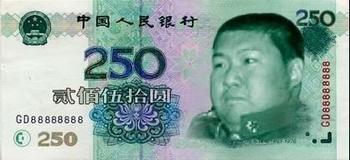
[Erbaiwu — “two hundred and fifty”]
Su Qin worked tirelessly to persuade the six states to unite against Qin, which history calls “minister of six states at once.” But while Su Qin was in the state of Qi, he was killed by an assassin. To catch the assassin, the King of Qi put up a special notice declaring that Su Qin had been a great traitor and that whoever had assassinated him would be rewarded with a thousand taels of gold. As soon as the notice went up, four men took the bait at once, each claiming to have done it. The King of Qi, who hated the assassin so much his teeth itched, said angrily: a thousand taels of gold — two hundred and fifty each; and while we’re at it, take these four “two-hundred-and-fifties” out and behead them!
[Chicu — “eating vinegar,” i.e. jealousy]
It is said that in the reign of Emperor Taizong of Tang, the chancellor Fang Xuanling was famous for being henpecked. His wife, though domineering, had always taken care of every detail of his food, clothing, housing and travel herself and would not let anyone else meddle. One day Emperor Taizong invited the founding ministers to an imperial banquet. When they had eaten and drunk their fill, Fang Xuanling bragged a little that he was not afraid of his wife, and Emperor Taizong, already somewhat tipsy, in high spirits bestowed two beauties on Fang Xuanling.
Fang Xuanling cautiously led the two beauties home. Unexpectedly, his wife cared nothing for whether it was the emperor or not; she flew into a rage, pointed at Fang Xuanling and cursed him loudly, even came to blows, and drove the two “beauties” out of the house.
Emperor Taizong came to hear of this. Wishing to curb the chancellor’s wife’s overbearing temper, he summoned Chancellor Fang Xuanling and his wife to account. When they arrived, Emperor Taizong pointed at the two beauties and a jar of “poisoned wine” and said: “I will not pursue your crime of defying an imperial order. Here are two paths for you to choose from: one is to take the two beauties home; the other is to drink this jar of ‘poisoned wine,’ and then you will no longer need to be jealous of others.”
Madam Fang raised the jar and, gulp after gulp, drank the whole jar of “poisoned wine” dry. Fang Xuanling was so anxious that tears streamed down his old face, and he held his wife and sobbed — but all the ministers burst out laughing together, for the jar had held vinegar from Qingyuan in Jinyang and was not poisonous at all. Seeing Madam Fang’s temper, Emperor Taizong sighed and said: “Madam Fang, do not blame Us for pressing you this way; your jealousy is simply too great. But since you would rather die than give up your husband, We withdraw Our order.” Madam Fang had never expected that risking death by drinking the “poisoned wine” would end like this; though the sourness made her stretch her neck and shake her elbows, in her heart she was overjoyed. Fang Xuanling, too, laughed through his tears. From then on, the phrase “eating vinegar” (吃醋) became a byword for jealousy among women.
[Quanzi — “dog son,” a humble term for one’s own son]
“Quanzi” (犬子, “dog son”) was originally the childhood name of Sima Xiangru. According to the Records of the Grand Historian, Sima Xiangru loved reading as a child and learned swordsmanship. So that their little son would be easy to raise, his parents deliberately chose a lowly word to name him, to keep evil spirits away — “therefore his parents named him Quanzi.” When Sima Xiangru grew up, he too felt the name sounded bad, and since he admired the character of Lin Xiangru, he changed his name to Xiangru, and “Quanzi” became his childhood name. But as Sima Xiangru became famous, “Quanzi” also became more and more widely known. People rushed to imitate it, using the word “quanzi” as a humble term for their own sons.
[Huanglianpo — “yellow-faced woman,” i.e. a faded old wife]
The face powder generally used by women in ancient times contained lead, which is toxic; long-term use would turn the complexion yellow. So the older a woman was, the longer she had been harmed and the deeper the harm. Hence older women would show the symptoms of a “yellow-faced woman.”
