

This English version was translated from the Chinese original with AI assistance. The Chinese text is authoritative.
Many people dislike nitpicking over words, regarding it as a bad habit of bookish scholars. Yet in real life, there are countless cases where a single word caused a misunderstanding that led to disaster. During the Second World War, because the Japanese prime minister used one wrong word, tens of thousands of Japanese people were plunged into devastation, and Japan became the only country in the world ever attacked with atomic bombs.
After Japan rejected the Potsdam Declaration, and with the Soviet Union delaying its declaration of war on Japan, Truman was forced to bring forward the use of the atomic bomb in combat. But the real reason for the bombing is open to debate. According to the revelations of the American historian William J. Coughlin in 1981, there was only one truth behind Japan’s rejection of the Potsdam Declaration and the devastating blow it later suffered: it was, astonishingly, a grave error caused by one Japanese person using one Japanese word wrongly!
“For several months after Japan announced its surrender in 1945, people were still pondering whether it was the atomic bomb or the Soviet entry into the war that led to Japan’s surrender and the end of the Pacific War. But the US Navy five-star Fleet Admiral Chester W. Nimitz later recalled: “In fact, the Japanese had already sued for peace before the atomic age was announced to the world with the destruction of Hiroshima and before the Russian entry into the war.”
In 1981 the American historian William J. Coughlin revealed that there was only one truth behind Japan’s rejection of the Potsdam Declaration and the devastating blow it later suffered: it was, astonishingly, a grave error caused by one Japanese person using one Japanese word wrongly.
In April 1945, on the very day Suzuki was sworn in as Prime Minister of Japan, American aircraft destroyed Japan’s last fleet. The Japanese authorities knew full well that they were utterly defeated. The joint offensive of the American army, navy and air force had cut off the shipping from occupied territories on which Japan depended for survival, and food on the Japanese home islands was about to run out.
The Potsdam Declaration was issued on July 26, 1945. Japan’s leaders reacted with delight, because its terms were far more lenient than they had imagined. The last article called on the Japanese government to proclaim the unconditional surrender of its armed forces, not the surrender of the government. The declaration also promised that Japan would remain intact as a nation. Most importantly, it hinted that the Emperor’s throne might be preserved.
So as soon as the Emperor heard the full text of the declaration, he explicitly instructed Foreign Minister Togo that he considered the terms acceptable. The whole cabinet then met to discuss the Allied ultimatum.
To prepare the public for surrender, Foreign Minister Togo strongly urged that the news be released to the press promptly. After four hours of heated debate, at six in the evening he finally won over the strongly opposed military. In the small hours of that night, the text of the declaration was distributed to the newspapers for publication.
But up to that point, the Japanese had only heard of the Allied statement at Potsdam through radio monitoring stations. The cabinet therefore decided to remain silent on the Potsdam Declaration for the time being. However, Prime Minister Suzuki was to meet the press the next day. Japanese reporters would certainly ask him about the declaration, so how should he answer?
The meeting finally decided that Prime Minister Suzuki need only say that the cabinet had not yet made a decision on the Allied demands and that discussions were under way. So when Prime Minister Suzuki met the press on July 28, he said the cabinet was pursuing a policy of “mokusatsu” (默杀). Not only does this Japanese word have no exact equivalent in English, its meaning is ambiguous even in Japanese. Suzuki meant that the cabinet had decided to withhold comment on the Potsdam Declaration, hinting that some major event was about to happen. But the Japanese people were tricked by their own language, because besides “no comment for now,” “mokusatsu” can also be read as “ignore.”
Unfortunately, the translators at the Domei News Agency had no way of knowing what Suzuki had in mind. They hastily translated the prime minister’s statement into English but chose the wrong meaning. The news was sent out to the Allied countries, reporting that the Suzuki cabinet had decided to “ignore” the Potsdam ultimatum.
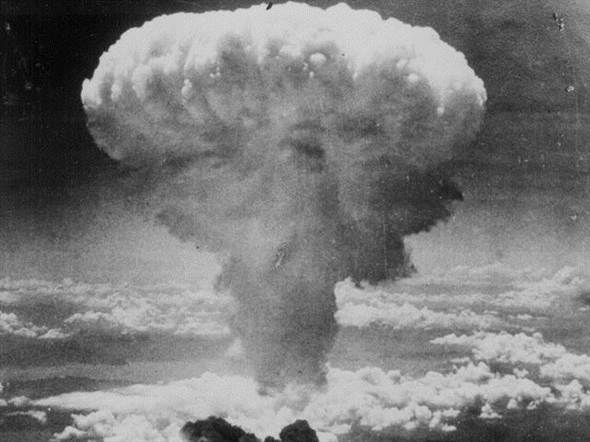
The cabinet was furious about Suzuki’s wording and the error Domei had then made, but it was too late… The Americans concluded that the Japanese government had rejected the Potsdam Declaration. On August 6, the Allies dropped the first atomic bomb over Hiroshima”, and then a second atomic bomb on Nagasaki.
