

This English version was translated from the Chinese original with AI assistance. The Chinese text is authoritative.
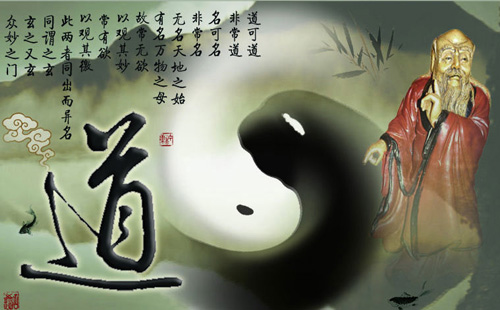
There are many Chinese characters we say all the time without necessarily knowing the fuller, richer meaning they originally carried. Yet, as it is said, “The Dao that can be spoken of is not the constant Dao; the name that can be named is not the constant name.” Even without knowing a character’s true meaning, in many cases we still know how to use it correctly. This may be one example of what the ancients meant by “one does not know the Dao, yet one is already in the Dao.” People cannot touch heaven (天, tiān), yet at every moment they can freely chat (聊天, liáotiān).
To give two examples at random: if we take the original meaning of 易 (yì) from the Book of Changes (Yijing), which we still do not fully understand, and read it into a few lines excerpted from something brother Chen Fei just said in a WeChat group, the result is quite interesting:
“The two diagrams handed down by the sovereign Fuxi and King Wen of Zhou: one is called the Prior-to-Heaven Eight Trigrams diagram, the other the Later-Heaven Eight Trigrams diagram. It is evident (显而‘易'见)…”
“The theory of how the meanings and forms of the trigrams arose must certainly predate these two diagrams. At most, these two diagrams can only have been a simple (简‘易') manuscript or a set of study notes made by the sovereign Fuxi and King Wen of Zhou while they were learning this discipline."
Examples of this kind are everywhere. From these two examples alone, one should be able to see that there was some truth in the following sayings of the ancients:
Chinese characters are a divinely imparted script,
the Chinese language is a divinely imparted language,
Chinese civilization is a divinely imparted civilization,
the Middle Land is the Divine Land,
and the Chinese people are the descendants of the divine…
Compared with alphabetic languages, formed by arranging meaningless letters according to rules and better suited to machine technology, the Chinese language system, rather than arising from pictographic construction, arises from the freehand expression of creation itself. It is better suited to human civilization, as though tailor-made for communication of the human “essence” and “spirit” (精神, jīngshén), even if, on the surface, our brains remain puzzled and understand only half of it.
The ink traces our pens leave every day, the internet slang our fingertips tap out, the pet phrases that pop out of our mouths as we chat, even the string of curses we spit out in anger: perhaps every word of them has always been a pearl. It is only because we have never known the Dao, have always been “rich without knowing we are rich,” that we have never cherished it and have squandered it freely, from the second generation of the rich to the third, until in the minds of the Nth generation every stored Chinese character has been replaced by machine code and the fortune is squandered completely.
If this is true of Chinese characters, what of the countless other spiritual treasures heaven has bestowed on humanity?
