

This English version was translated from the Chinese original with AI assistance. The Chinese text is authoritative.
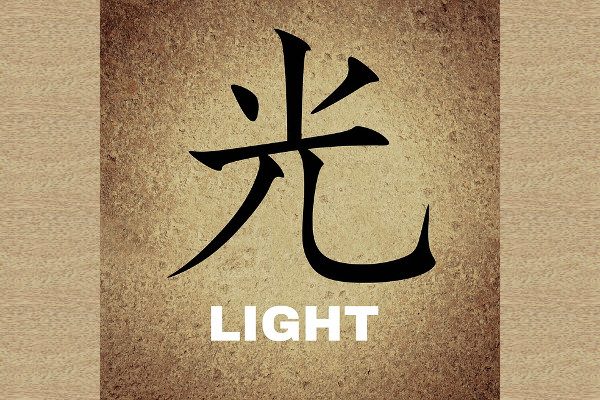
Everyone who has mastered Chinese characters is one of the most unique and intelligent people on this planet!
To understand Chinese characters is truly to understand Chinese culture. The wisdom of the Chinese people is fully displayed in Chinese characters.
Why are people who use Chinese characters smarter?
Chinese is not only the most advanced language in the world, but will also be the most scientific language of the internet age!
Below we look at how people have explained this question from a professional angle. The material for this article comes from the internet; our respects to the original authors.
(1) Language and the speed of thought
The Chinese think faster than Americans, because Chinese has more “kinds of sounds” than American English.
What are kinds of sounds? And why does a greater variety of sounds mean faster thinking?
Put simply, the number of kinds of sounds is how many different sounds can be produced. In Mandarin, one Chinese character is one sound. In English, one word is several sounds.
English has 20 vowels and 20 consonants and no tones, so the kinds of sounds in English cannot exceed 20×20=400. That is, if one sound corresponds to one thing, then the 400 sounds of English can express only 400 things. Things beyond these 400 can only be expressed by repeating sounds, using 2 or 3 sounds. An ordinary person takes about 1/4 second per sound. Clearly, for an American to express a 401st thing takes 2 sounds, or 1/2 second, while a Chinese person can express 1,200 things with just 1 sound each, taking 1/4 second. Let us look at this in detail:
Mandarin has 20 initials, 39 finals and 4 tones; multiplied together, the result is about 3,000 sounds. Of these, 2,500 sounds are usable, and 1,200 are actually used in Mandarin. So, to express 1,200 things, Chinese Mandarin needs only 1 sound each, taking 1/4 second.
Someone once compared the speed of reciting the multiplication table in English and in Chinese: Chinese took 30 seconds, English 45 seconds. So if two people recite the multiplication table at the same time, at 30 seconds the Chinese speaker will certainly have reached “nine nines are eighty-one,” while the English speaker will certainly not have got that far, perhaps only to “seven sevens are forty-nine.” This shows that speakers of a language with more kinds of sounds think faster than speakers of a language with fewer. Mandarin has more kinds of sounds than English, so the Chinese think faster than Americans.
In the same amount of time, a person who thinks faster can naturally think about more problems, and is of course smarter. This is why the Chinese are the smartest; it is the innate advantage of the Chinese nation. Another comparison is between Japanese and Chinese. Japanese uses 100 kinds of sounds, Chinese 1,200. So when Japanese people read many Chinese characters, they must use two or three sounds to express them (speaking must be exhausting for the Japanese). Suppose one Chinese character corresponds to two sounds in Japanese; then the information a Japanese person can enjoy in a lifetime is only half that of a Chinese person.
(2) Language and reading efficiency
The number of English words now exceeds a million. Astonishing and frightening: an ordinary person could not memorize them all in a lifetime. Yet all these words can be expressed with four thousand Chinese characters.
Why are there so many English words? Let’s look in detail. In English, pork has nothing whatsoever to do with pig and meat. Pork, mutton and beef have no connection with one another at all. A rooster is a cock, a hen is a hen, a chick is a chicken: that is the chicken family. Can you tell male from female, or big from small?
They are completely unrelated to one another, which is really foolish and unbearable. It is easy to see that compound nouns in English bear no relation to their component words. The bulk of English vocabulary is like this.
The emergence of new things is always accompanied by new English words, such as ROCKET and COMPUTER, but Chinese has no need for this: a rocket (火箭) is simply an “arrow” (箭) driven by “fire” (火), and a computer (计算机) is simply a “machine” (机) that can “calculate” (计算)! English cannot do this; it cannot rely on forming compounds, because they would be “too long.” A rocket would become “FIRE-DRIVEN-ARROW,” a computer “COMPUTAIONAL-MACHINE,” and so on.
This is how a million-plus English words came about. Suddenly one feels: English is so clumsy. Then think of our Chinese: there is basically no need to invent new characters; existing characters are simply combined into words. We truly owe thanks and admiration to our wise ancestors.
This is because the ability of Chinese characters to form words flexibly is so important. It lets us infer from one thing to others and greatly reduces the amount we must memorize. Look at this example. In Chinese, isn’t 火箭 (rocket) simply an arrow propelled by fire? Isn’t 计算机 (computer) simply a machine that can calculate? Different combinations express different things. Great, and easy. And English? When rockets appeared, a new word ROCKET had to be created; when computers appeared, along came COMPUTER. So much to memorize, so tiring. See, that’s the gap. The more one understands this, the prouder and happier one feels to be Chinese.
Someone may ask: English can also join pig and meat together, which would lighten the memory load. Good question. Let’s see whether it can really be done as you say. Now we no longer use pork; pork is expressed as pig plus meat, pigmeat. Then pigmeat takes four syllables to pronounce, while pork takes only two. So compound words need no memorizing but increase the number of syllables, while new words save syllables but increase memorization. English cannot have it both ways. If all new English words took compound form, how long would they be? Just imagine. Then how many syllables would an American need to say one sentence? It would be a wonder if they didn’t die of exhaustion!
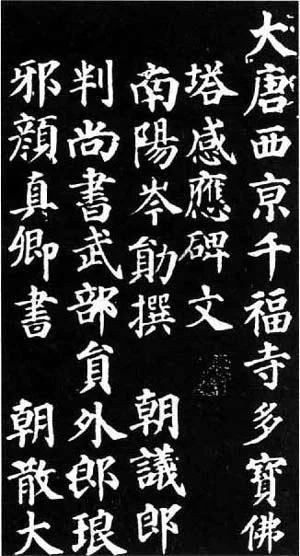
Read on. Chinese students today can fluently read the Songs of Chu by the poet Qu Yuan of 2,000 years ago. This stability of the script is the foundation for passing on wisdom. Only with such a stable script can one understand the civilization of one’s distant ancestors and keep inheriting and progressing. English cannot do this, because it is too unstable. Modern people already find it hard going to read Shakespeare in the original, let alone texts from 2,000 years ago.
(3) Language and the transmission of civilization
English and Chinese have some further features that need explaining. English is a “one-dimensional” and “cipher-like” language. The one-dimensionality of the language makes American thinking linear. This linear thinking has had a far-reaching influence on Americans: they are direct in how they do things, they like straight lines in painting, and so on.
The cipher-like nature of the language makes it abstract and hard to understand; the 3 million American children suffering from dyslexia (of normal intelligence) are its victims. Chinese children of normal intelligence rarely suffer from dyslexia, because Chinese is a “two-dimensional” (the maximum number of dimensions on paper) and “imagistic” language. The two-dimensionality of the language makes Chinese thinking curvilinear (planar). Every Chinese character is a picture, not only easy to understand but N times faster for taking in information than a cipher. Taking less time to obtain the same information naturally makes one smarter. (An innate advantage.)
In the same scene, Americans tend to focus on the central object and ignore the background (the result of one-dimensional thinking), while the Chinese, in attending to objects, pay more attention to the whole scene (the product of two-dimensional thinking).
Ignoring the background makes Americans see problems deeply but one-sidedly. People who see things one-sidedly tend to be single-minded and inflexible, which makes the cost of doing things too high. This is the underlying reason why research and development costs in America are high (Americans may not be aware of it).
Attention to the whole scene makes the Chinese see problems comprehensively and know how to adapt. People who see problems comprehensively and can adapt naturally find it easy to do things well, because when things are seen through clearly, even complex problems become simple.
The Chinese usually use three to four thousand characters, whereas the English of Shakespeare’s time had only thirty thousand words, all of which he himself could master. By Churchill’s time, his vocabulary was still thirty thousand words, but English by then already had nearly a million words.
So I believe the skill with which Shakespeare used English words is something later generations simply cannot attain. Linguists’ requirement for English vocabulary is that an educated English speaker should master fifty thousand to two hundred and fifty thousand words. Not only is the range enormous, but by this standard Shakespeare and Churchill would both be illiterate, or at least uneducated.
In the English-speaking world, don’t expect to read a newspaper without 20,000 words, and don’t expect to read Time magazine smoothly without 30,000. Professionals ten years out of university generally know 80,000 words. As for Chinese characters, need we say more: the national literacy standard is 1,500 characters; science and engineering students generally know three or four thousand, which is no problem even for scientific research. As for reading books and newspapers, any primary school graduate can do it. In a word: being Chinese is great. (Source: Wise Reflections: Chinese, the Finest Language)
Think about it: an American who has learned 20,000 words can still enjoy only limited information. A Chinese person who has learned three or four thousand characters can enjoy nearly all information. Learning little yet knowing much: an astonishingly high return on investment. What is wisdom? This is wisdom.
For example, someone once asked several professors how to say “长方体” (cuboid) in English. These engineering professors, native English speakers, did not know. Several graduate students were asked, and they did not know either.
Words like “四环素” (tetracycline), “变阻器” (rheostat), “碳酸钙” (calcium carbonate) and “七边形” (heptagon) are known only to specialists. Nothing like Chinese, where one can infer from one thing to another. (Dumbfounded?) Ordinary Americans have trouble mastering these words, let alone using them freely in conversation. Being a learned person in America is really not easy; vocabulary alone is a big problem.
At present, English vocabulary has passed 400,000 words, and is expected to pass the 1 million mark by the middle of next century.
So Shui Muran believes that English is powerful because it came along with the global colonization of the empire on which the sun never set. It is an imposed culture. True culture should not be aggressive in any way, but should moisten things silently, gently improving every corner of the world. So in the present wave of globalization, Chinese characters are bound to improve the cultural genes of the whole world and make a great contribution to world civilization!
(4) The future will prove the greatness of Chinese
“There’s one thing I don’t understand. You say Chinese is superior, so why can’t Chinese literary works be translated into English?” Good question, well asked. Chinese literary works cannot be translated into English, yet English literary works can be translated into Chinese. This phenomenon shows that every idea expressed in English can find a corresponding expression in Chinese, while ideas expressed in Chinese cannot necessarily find a corresponding expression in English. Isn’t that so? “Yes.” If you have studied mathematics and know about sets and proper subsets, you will understand.
This phenomenon shows that English is a proper subset of Chinese. The ideas English can express are only part of what Chinese can express. English is flawed, greatly flawed.
By comparison, Chinese is far more perfect: it can express richer ideas with fewer characters. It is because people misunderstand Chinese that this happens: taking the excellent for the inferior. Owing to national strength and history, many people have the notion that Western things are better. This preconception must be rejected. It has caused our country many losses; it is time to reflect and examine ourselves.
Some research indicates that speaking Chinese uses the right brain (the genius brain) more than speaking English. In terms of innate endowment, the Chinese have more advantages than Westerners. What our ancestors left us really is good stuff; it’s just that self-righteous modern people cannot understand it. A saying comes to mind: shallow people like to view profound people from a shallow angle; foolish people like to view wise people from a foolish angle. Rather interesting.
In language, or in innate advantage, Americans have lost to the Chinese, and the Jewish people have lost to the Chinese nation too. Of course, this is not because we are excellent, but because our ancestors were so excellent. Thanks and admiration to them! Yet nowadays many people disregard or even despise their own culture, which is very frustrating. The author’s view: in the future, the true world language will be Chinese.
Once you understand that Chinese is a language of wisdom, you will just laugh at countries like Korea and Vietnam that are busy all day removing Chinese characters. For removing Chinese characters is extremely foolish; Vietnam already regrets it bitterly. Doing so not only abandons their history written in Chinese characters, but will also make their nations shallow and narrow.
