

This English version was translated from the Chinese original with AI assistance. The Chinese text is authoritative.
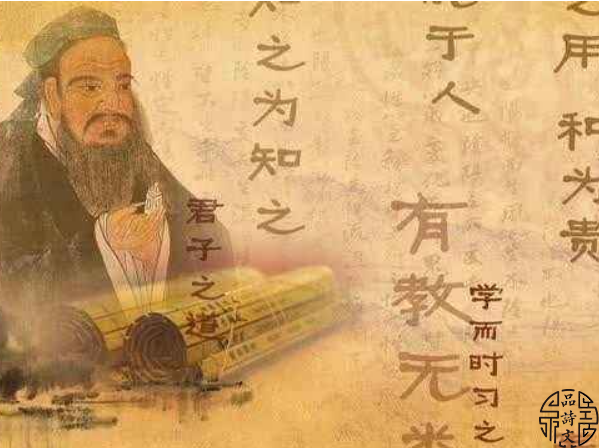
Some say: learn the Eight Trigrams from the Book of Changes (Yijing), learn military strategy from the Guiguzi, and learn how to be a person from the Analects. In the Analects, “petty person” (小人) and “gentleman” (君子) appear as many as 24 and 107 times respectively. The six most classic maxims of the Analects teach you how to discern with a keen eye the gentlemen and petty people around you.
1. The gentleman seeks it in himself; the petty person seeks it in others
As the old saying goes, the petty person is never wrong, while the gentleman often finds fault in himself. The gentleman makes demands of himself, the petty person of others; when problems arise, the gentleman looks for the cause in himself, the petty person looks for it in others. Mencius says: “When your actions do not succeed, turn back and seek the cause in yourself.” When things do not succeed, when you meet setbacks and difficulties, or when your relationships with others go badly, do not blame heaven and others, but look back and examine yourself.
Once there were two families. The Wang family at the east end of the village often quarreled, while the Li family at the west end lived in harmony. One day the Wangs went to the Lis to ask why their family was always so harmonious.
The Lis answered: “Because we often do wrong.” The Wangs did not understand. Just then, the Li daughter-in-law came in from outside and slipped in the main hall. The mother-in-law, who was mopping the floor, hurried over to help her up, saying: “It’s all my fault for making the floor too wet.” The son, seeing this from the courtyard, ran over and said: “It’s my fault for not telling you in time that the floor was being mopped, so you fell.” The daughter-in-law, helped to her feet, said with an embarrassed look: “It’s my fault; I wasn’t paying attention and slipped.”
Seeing this, the Wangs understood at once. If it had been in their home, the mother-in-law would surely have scolded the daughter-in-law for not watching where she was going, the daughter-in-law would have flared up and retorted, and everyone else would have burst out laughing on the side.
Some people like to hang their own problems on their backs and others’ problems on their chests. They see others’ faults but not their own shortcomings. With such people, just don’t listen, don’t argue, don’t associate, don’t bother; let them be, and never get entangled.
2. The gentleman is calm and at ease; the petty person is always anxious
Since ancient times many people have made this saying into a plaque to hang in their rooms to encourage themselves. Confucius said that the gentleman is broad-minded, tolerant in dealing with people and composed in handling affairs; the petty person is narrow-minded, calculating and ill at ease.
The gentleman accepts people and things, acts openly, and is not infatuated with honor and disgrace, gain and loss, so he is free of worry and doubt, fear and disturbance. The petty person is enslaved by things, led along by desire for fame and gain, worrying about gain and loss, and so he is anxious and uneasy.
Two monks were traveling together. They came to a river and saw a woman whose leg was injured and who could not cross. The old monk offered to carry her across on his back, then set her down and continued on his way.
All along the road the young monk could not help muttering: how could a monk carry a woman across a river? Approaching women is a great taboo for Buddhists. He walked and thought, and finally could not hold back any longer and said: “Haven’t you broken the precepts? How could you carry a woman?” The old monk sighed: “I put her down long ago, but you still haven’t put her down!” Hearing this, the young monk fell silent in shame.
Confucius said: “If, examining himself, he finds nothing to be ashamed of, what has he to worry about or fear?” As long as a person is open and aboveboard, with nothing to be ashamed of before heaven above or earth below, he can handle affairs with composure. To measure a gentleman’s heart by a petty person’s mind: if you have a ghost in your own heart, you will naturally see ghosts in others. One who always suspects others of ill intent is most likely an evil person himself.
3. The gentleman is harmonious but not conforming; the petty person conforms but is not harmonious
Gentlemen often have their own views on things; their opinions differ but they respect each other. Petty people agree on the surface but scheme against each other, harmonious in appearance but not at heart.
Sima Qian said: “In death and life, one knows true friendship. In poverty and wealth, one knows the manner of friendship. In high and low station, friendship is revealed.” Whether a person is sincere and worth befriending deeply becomes clear at a glance in the moment of life and death and in circumstances of poverty and wealth.
Under Emperor Wu of Han, Li Ling led five thousand infantry deep into Xiongnu territory and won battle after battle against thirty thousand enemy troops. Sima Qian shook his head when he heard this: after so long so deep in enemy land, men and horses exhausted, they were in danger. The Xiongnu gathered eighty thousand cavalry to encircle them, and in the end Li Ling, heavily outnumbered, was captured. Emperor Wu believed slanderous reports that Li Ling had surrendered and betrayed his country, and was enraged.
At court, Li Ling’s former friends all fell silent; only Sima Qian frankly remonstrated. He was not a close friend of Li Ling; Li Ling belonged to the radical faction, and he and Sima Qian differed in political views and ways of acting. But Sima Qian knew well that they shared a country to protect, and that was the greatest harmony.
Although their positions differed, Sima Qian admired Li Ling’s military talent and was willing to vouch for him with his life. As a result, Emperor Wu in his anger threw Sima Qian into prison on the charge of “slander.” Imprisoned, Sima Qian had expected friends to come to his aid. Instead he faced only one reality: “None of my acquaintances came to save me; not one of those close to me said a word.” For generations his family had been Grand Historians with countless acquaintances, yet only in his hour of peril did he discover that his so-called friends merely “conformed but were not harmonious.”
Some say that time reveals people and adversity reveals hearts. Those who call you brother every day and agree with you on everything are not necessarily the people you can trust most. Such people easily say one thing to your face and stab you in the back. We cannot guard against petty people’s plots everywhere, but we can detect them early and keep a respectful distance.
4. The gentleman is easy to serve but hard to please; the petty person is hard to serve but easy to please
Confucius said that the gentleman is easy to get along and work with but hard to please, while the petty person is easy to please but hard to work with.
The gentleman, in making friends, sees the good in people; the petty person, in dealing with people, sees their evil. Zeng Shen once said to his disciples: “The Master sees one good point in a person and forgets a hundred faults; that is why the Master is easy to serve.” When Confucius saw one good deed in someone, he would forget that person’s past failings, affirming the good side of the other, and so he was easy to get along with.
The petty person sees one fault in a person and forgets a hundred good points; years of friendship, and just because of one dissatisfying matter, he hurls abuse and repays kindness with ingratitude. Confucius said the gentleman is easy to serve, but if you try to please him by improper means, he will not be pleased. The petty person is hard to serve, but can be pleased with sweet words.
In the reign of Emperor Zhenzong of Song there was a man named Ding Wei who liked to be flattered and had himself become vice chancellor by flattery. Once, dining with the chancellor Kou Zhun, Ding Wei saw grains of rice stuck in Kou Zhun’s beard and hurried over to comb his beard, praising it lavishly.
Kou Zhun knew well that Ding Wei was ill-intentioned and disdained to associate with him. He sneered: “Is there really a chancellor in the world who strokes beards?” From then on, “stroking the beard and patting the horse” (溜须拍马) became a byword for petty people.
Balzac said: “Flattery never comes from great souls; it is the specialty of mean, petty people.” A person who in work and life can only bear to hear flattery and praise and cannot stand a word of truth will not speak the truth to others either.
5. The gentleman is inclusive and not partisan; the petty person is partisan and not inclusive
The gentleman unites people by the Way and righteousness and does not collude; petty people collude for private desires and do not unite.
An old saying goes: the gentleman gathers with others but forms no faction; the petty person forms factions but does not truly gather. The gentleman in conducting himself puts virtue and talent first, takes major matters of right and wrong as his responsibility, and shows no partiality or favoritism. The petty person in dealing with the world loves or hates according to sameness or difference, judges right and wrong by love and hate, sides with those like him and attacks those who differ, and schemes for private gain.
The master of Chinese studies Xiong Shili once said: “People say I am solitary and cold. I think that if one is not solitary and cold, one cannot be in harmony with the world.” “Solitary and cold” was what resentful people called him; with like-minded people he was “in harmony with the world.”
Someone organized an “Eight Don’ts Society” and warmly invited him to join, hoping to rely on his prestige in academia to get things done.
Xiong Shili rebuked them to their faces: “You with your ‘Eight Don’ts’ still want to set up an organization; this is forming a clique for private ends. You should add a ‘Ninth Don’t’: don’t form small cliques.” Everyone who heard it was ashamed. Besides his scholarship, Xiong Shili made friends widely with worthy people and was close to Liang Shuming, Qian Mu, Feng Youlan and others; he often met friends through writing, and many famous people and men of ideals came to him because of his reputation.
The Master said: “Virtue is never solitary; it always has neighbors.” The gentleman makes friends throughout the world through virtue and talent; the petty person scrambles shamelessly for profit. The gentleman holds to great righteousness and gathers with others; the petty person gathers and scatters in pursuit of desire. A person led by private desire will surely waver, and one day will betray trust and righteousness for the sake of private desire.
6. The gentleman cherishes the law; the petty person cherishes favors
In his conduct the gentleman first considers not overstepping laws and norms; the petty person considers only whether there is profit to be had.
The gentleman restrains himself to serve the public good and will not take what is not obtained by the right way; the petty person takes risks in hope of luck, covets immediate favors, and disregards punishment even as he runs into it. In the Yang family ancestral hall in Hunan there is this couplet:
First line: Heaven knows, earth knows, you know, I know; even in a dark room there is no deceit
Second line: Upholding heaven, standing on earth, loving others, disciplining oneself: open and aboveboard
It is about Yang Zhen, a prefect under Emperor An of Han. When Yang Zhen was appointed prefect of Donglai, he passed through Changyi, whose county magistrate, Wang Mi, was a talent he had recommended when he was regional inspector. Hearing that Yang Zhen was passing through, Wang Mi made a special trip to welcome him, and that evening the two talked late into the night at the post station. As he was leaving, Wang Mi took out ten jin of gold and, seeing no one around, said quietly: “No one will know at this moment; please accept it.” Yang Zhen rebuked him sternly: “Heaven knows, earth knows, you know and I know. How can you say no one will know?” Later people praised Yang Zhen as the “Four-Knowings Prefect” for his integrity and his gentlemanly refusal to abuse power for personal gain.
A person who does not know how to follow the rules and restrain himself, who has no principles and lets greed break through his bottom line, will sooner or later be destroyed by profit.
The wisdom of the Analects from 2,500 years ago still has infinite value when read today. The Northern Song statesman Zhao Pu even said that “with half of the Analects one can govern the world,” and our lives too can draw nourishment from this great work.
Read the Analects, cultivate the conduct of a gentleman, rid yourself of the harm of petty people, and let our lives become fresher and simpler.
