

This English version was translated from the Chinese original with AI assistance. The Chinese text is authoritative.
The method for explaining these characters still follows the method appended at the end.
倍 (bèi): its original meaning was the same as “背” (bèi), “to turn against; to face away.” 倍 means “to turn back.” Nowadays it is mostly used to mean “to double,” to add an equal amount to the original number. This character obviously comes from the gesture Chinese people generally use to indicate doubling: turning the hand over from palm-up to back-of-hand-up indicates doubling. According to the character-formation principle that related meanings share the same pronunciation, “倍” and “背” are homophones.
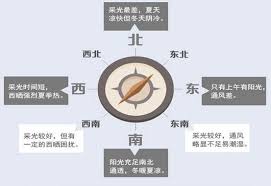
“背” (bèi, “back”) and “北” (běi, “north”) have the same sound and rhyme. Why? 背 is the back of the body. China is in the northern hemisphere, and houses facing south get the most suitable amount of sunlight: you can see the morning sun rise in the east, the house is bathed in sunshine all day, yet there is no western afternoon sun, so after work the interior is cool and pleasant and good for resting. The energy field of the whole house is in harmony with the rhythm of the flow of the meridians in the human body, so Chinese houses are mostly built facing south with their backs to the north.
When the house sits north and faces south, the chairs inside are also arranged to face south, so when people sit on them they necessarily face south with their backs to the north; the side facing north is the back. Hence “背” and “北” are pronounced the same. 背 has 北 on top and 月 below; 月, as a component of Chinese characters, often appears in the names of parts of the human body. Seen from the character’s form, the part of the body that faces north is the “背.” These two characters, “背” and “北,” thus record the custom in traditional Chinese culture of choosing the orientation of dwellings.
Method of explaining characters:
- Same sound, same meaning; same sound, opposite or related meaning: there is a rule in Chinese characters that homophonous characters often have the same, opposite or related meanings, so that these homophones form a group of characters closely connected in meaning;
- Yin and yang in opposition, mutual exchange and mutual generation: one is yang and two is yin; the left-falling stroke is yang and the right-falling stroke is yin; the form of a character is yang and its sound is yin. The strokes, side components and radicals, and the sound, form and meaning of Chinese characters all have yin–yang distinctions, and when forming characters these elements are combined according to the laws of yin and yang, the Four Images and the Eight Trigrams;
- Cultural transmission and moral education: the structure of Chinese characters carries a strong content of cultural transmission and moral education; while expressing a certain meaning, it also carries the intent of enlightening the people;
- In the evolution of Chinese characters, only those that conformed to the laws of the universe and all things survived. Therefore even later changes in pronunciation and form must also accord with the above principles of character formation.
